Modern Pearl Jewelry: Styling Rules Worth Keeping
- Trinket File
- Metals and Stones
- 14 Sep, 2026
Pearls don’t belong only to formal sets anymore. A strand works with a T-shirt, a baroque drop sits beside a plain gold hoop, and black or silver pearls look as modern as any polished metal. The visual rules have changed; the physical ones haven’t. Pearl is nacre, a soft layered material, and it handles wear differently from a mineral gem.
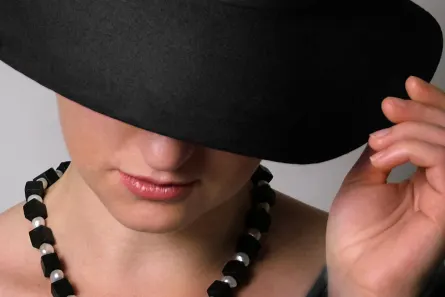
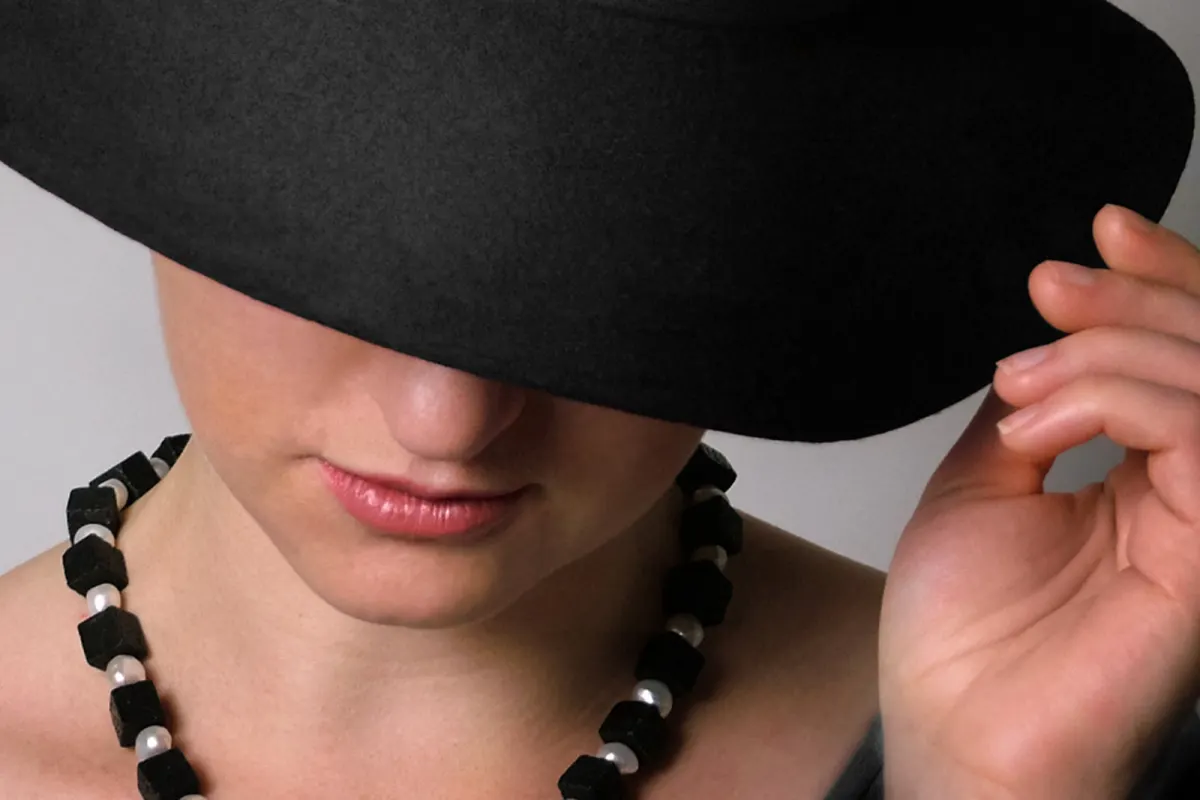
Modern pearl jewelry starts with scale and contrast. A pearl gives a soft, reflective surface. It reads current when that softness sits beside a clean line, a matte finish or a graphic shape. You’re not making a pearl look like something else; you’re giving it a setting and context that feel now.
Change the scale
Uniform round pearls of one size create a traditional rhythm. Varying the scale makes it modern. One large pearl can be the focal point, with smaller pearls or plain gold links in supporting roles. A strand can mix larger baroques with smaller rounds if the drill holes and knots sit right.
Scale should follow your body, not a fashion rule. A chunky pearl necklace sits differently on a long neck than a shorter one. A big pearl earring reads sculptural with short hair and like a small detail beside a high collar. When trying a piece, look at the whole line from earlobe or collarbone to hem. Proportion is easier to judge in context.
Baroque pearls are especially useful because their irregular outline breaks the formality of a matched strand. The shape is a feature, not a flaw. Check the surface for deep cracks or thin chalky patches, and make sure the pearl sits securely; a baroque shape often needs more support than a round because there’s no even surface against the mount.
Pair pearls with metal on purpose
Yellow gold warms white and cream pearls and gives black pearls richer contrast. White gold and silver keep things cool and graphic. Mixed metals can look contemporary, but the metal should support the pearl, not compete.
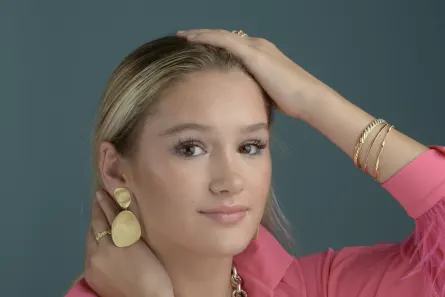
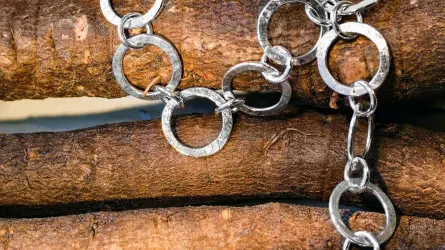
Textured metal contrasts nicely with nacre. Hammered gold beside a smooth pearl emphasizes both; a brushed surface sharpens the pearl’s reflection. Polished metal makes a continuous glow, which softens the whole piece unless the shape is strong.
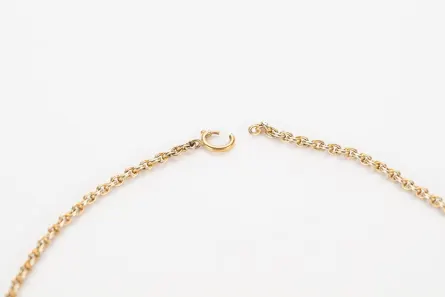
When a strand’s clasp is worn at the front, it’s part of the look. A decorative clasp can become the focal point on a short strand. If it isn’t meant to be seen, choose one that won’t open under the strand’s weight. Pearl necklaces carry more weight than they look.
One strand, three ways
Take a single princess-length strand (17–19 inches, per Jewelers of America):
- Over a crisp shirt. Worn just inside an open collar, the strand echoes the collar line and sharpens it.
- Over a plain crew-neck knit. Let it sit on the fabric as the only pattern in the outfit.
- Layered with gold. Add a fine gold chain several inches longer. A 16-inch (about 40 cm) strand with a 20-inch (about 50 cm) chain gives two clear planes; at the same length, they rub and compete.
A single pearl pendant sits naturally in an open neckline and layers with a fine chain if lengths are spaced. Store the soft pearl apart from the harder chain afterward.
Earrings are the easiest entry point. A single large stud, an irregular drop or a pearl set into a sculptural hoop makes the material feel current without restyling a whole strand. Weight still matters, especially with a drop: the pearl sits at the end of a lever and can feel heavier than its size suggests.
Texture, color and contrast
Pearls aren’t only white. Silver, gray, green, pink, gold and black body colors all behave differently with skin and fabric. A dark pearl reads sharply against light fabric; a pale one can vanish beside similar cream unless the metal or finish defines it.
Overtone is the color seen over the body color. Rose, green and blue overtones change how a pearl takes light, and a strongly overtoned strand can look different in daylight, store lighting and evening light. Take it to a window before deciding.
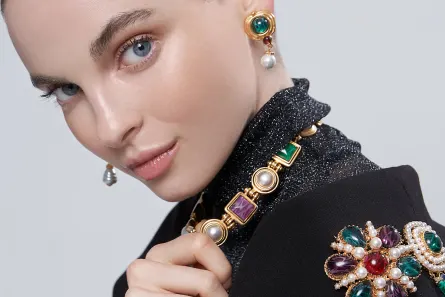
The setting adds contrast too. A pearl in a simple bezel looks graphic, surrounded by small stones it looks glamorous, on a matte brushed band it feels contemporary. The setting controls how much surface is exposed, so it affects wear and care as well.
Care matters more than styling
Nacre is soft: GIA puts pearl at 2.5–3 on the Mohs scale. Quartz dust, a metal clasp, a ring and a zipper are all harder. A pearl loose in a jewelry box will collect scratches from whatever sits beside it.
Perfume, hairspray and makeup go on before pearls; alcohol and oils dull the surface over time. Wipe pearls with a soft, barely damp cloth after wearing and dry them flat. Don’t soak, ultrasonic, steam or silver-dip them. Chemicals and heat that are fine for metal can damage nacre and the silk or cord holding the strand.
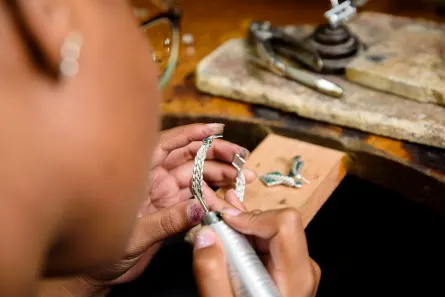
Inspect drill holes when buying; a chipped edge can crumble further. Pearls should sit close and the cord should be clean. Knots between pearls stop them rubbing and keep the strand from scattering if the cord breaks. On a necklace worn often, the cord stretches and soils before the pearls wear out. Restringing is routine maintenance, usually about $4–$8 per inch at jewelers listing the service, Oct 2026, so roughly $70–$140 for an 18-inch strand.
Modern pearl checklist
- Judge the shape against the outfit, not a matched-set ideal.
- Check for deep cracks, chalky patches and chipped drill holes.
- Choose a metal color that flatters both pearl and wearer.
- Test the piece at the neckline where it’ll actually sit.
- Keep layered chains and pearls at different lengths.
- Confirm the clasp carries the weight and closes with a definite action.
- Store pearls in a soft pouch apart from chains and rings.
- Treat cleaning as care for nacre and cord, not metal polishing.
A pearl looks modern when it’s chosen with confidence, not convention. Scale, contrast and setting do the styling. Nacre quality, surface condition and a sound cord decide whether it still looks sharp years later.