Pearls and Organic Gemstones: Judging and Care
- Trinket File
- Metals and Stones
- 05 May, 2026
Pearls and the other organic materials used in jewellery are graded with language borrowed from diamonds, which is where the confusion starts. A mineral stone is judged on colour, clarity and cut, and it resists most of what daily life throws at it. A pearl, a piece of coral or a bead of amber is a layered or resinous organic material with a surface soft enough to mark with a fingernail. Treated as a hard gemstone, an organic piece is damaged quickly; treated as what it is, it can last generations.
The useful question is not which pearl is best in the abstract. It is whether the nacre is thick enough and the surface sound enough for the way the piece will be worn.
What a pearl actually is
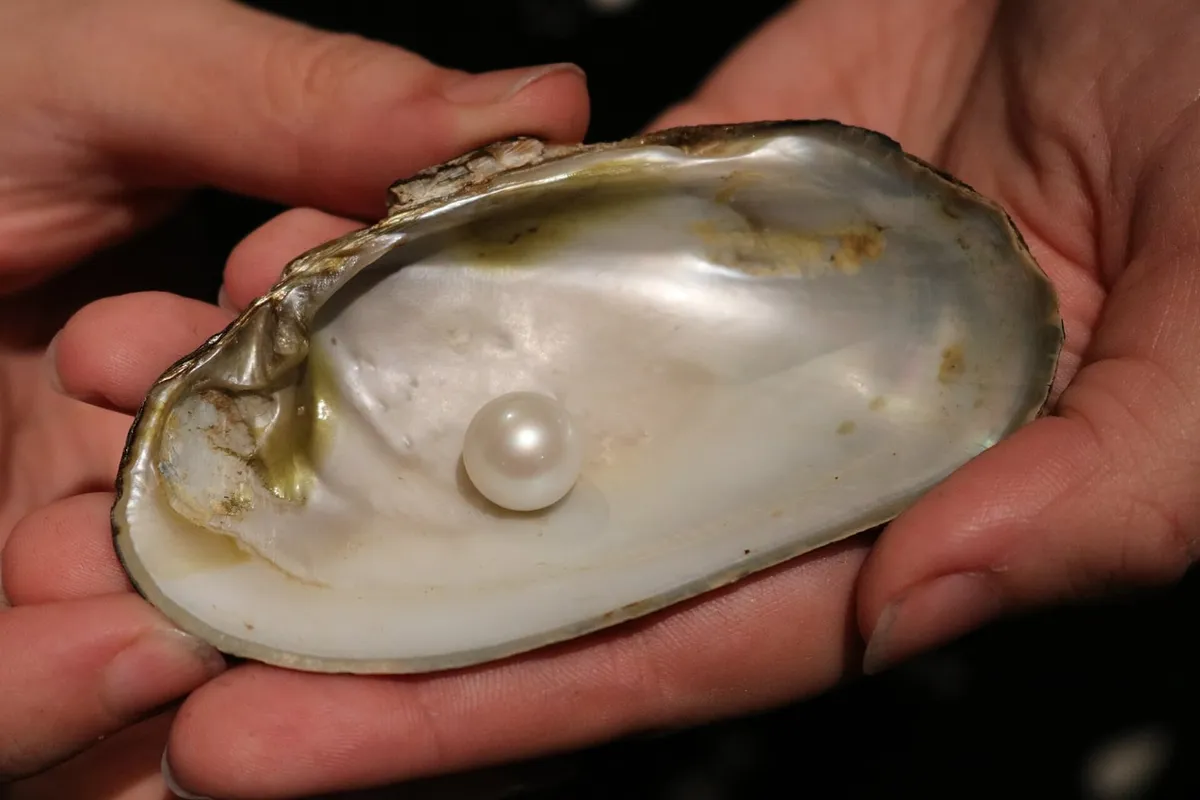
A pearl is nacre: thin layers of aragonite platelets bound together by a protein called conchiolin. The layers build up in a mollusc over months and years, and each layer is a fraction of a millimetre thick. The thickness of the nacre, rather than the size of the pearl, decides how deep the surface looks and how much wear it will take.
Cultured pearls come in two constructions. Bead-nucleated pearls, which include akoya, South Sea and Tahitian pearls, are grown around a spherical shell bead, and the mollusc deposits nacre over it. Tissue-nucleated pearls, which include most freshwater pearls, have no bead and are solid nacre throughout. That difference matters the moment the surface is worn: a bead-nucleated pearl with a thin nacre layer can wear through to the bead, while a solid nacre pearl simply loses a little of its surface.
Because the nacre is mostly calcium carbonate, pearls sit low on the hardness scale, in the region of 2.5 to 4. Quartz dust, a zip, a metal clasp and a ring are all harder. That is the whole reason care matters more here than with a diamond.
Lustre, overtone and what the eye can check
Lustre is the sharpness and depth of the reflection. Under a bright light, a good pearl returns a crisp, almost mirror-like highlight, while a dull one returns a soft blur. Overtone is the translucent colour that sits over the body colour, such as rose or green over white, or green over dark grey. Both are assessed by rolling a pearl under a neutral light and looking at the reflection rather than the colour.
Surface quality is judged at about 30 to 40 cm under direct light. A few small marks are normal, and no commercial pearl is flawless. What matters is the nature of the flaws: a shallow pinprick or a smooth bump affects appearance, while a deep pit, a crack or a thin, chalky patch goes through or near the nacre and shortens the pearl’s life. Shape runs from round through near-round, button and drop to baroque, and it changes price far more than durability, so an off-round pearl with thick nacre and clean surface is a sturdier piece of jewellery than a round one with a thin skin.
Freshwater against saltwater
- Freshwater, tissue-nucleated: solid nacre through the pearl, a wide range of shapes, and generally the most affordable. Often slightly off-round or baroque, and durable because there is no bead to expose.
- Akoya, bead-nucleated: usually round with a sharp, bright lustre. Nacre thickness varies by grade, and thin-nacre examples are the ones that show wear first.
- South Sea and Tahitian, bead-nucleated: larger, typically with thicker nacre and a naturally dark or silver body colour. Priced well above akoya.
- Keshi: nacre formed without an intentional bead, so effectively solid nacre, often irregular in shape and used for individual pieces.
Imitations, treatments and drill holes
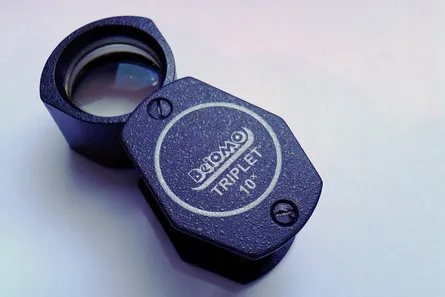
Imitation pearls are beads of glass, plastic or shell coated to look like nacre, and they are legitimate when sold as such. Under magnification, an imitation surface is smooth with a faint dimpled texture, while real nacre has a fine, overlapping, almost tile-like structure. Worn beads show the coating at the edge of the drill hole, where it flakes or rings the hole.
Treatments include bleaching, dyeing and, in some cases, a thin surface coating. These are common and not automatically a fault, but a coating behaves like plating: it wears at high points, and it should not be rubbed or cleaned with anything abrasive.
The drill hole is the weak point of any strung pearl. Drilling can chip the nacre at the exit, and a thin edge there will crumble. A knot tied between pearls protects each one from rubbing against its neighbour and stops a whole strand escaping if the cord breaks. Check whether knots are present, whether the cord is clean, and whether the pearls sit closely without gaps.
Organic materials beyond pearls
Coral is calcium carbonate in a branching skeleton, porous and relatively soft. It is treated by bleaching or dyeing in some trade, and it reacts to acids and to perfumes. Amber is fossilised resin: light, warm to the touch, and soft enough to scratch with a fingernail. It is attacked by alcohol, solvents and hairspray, and it can craze in very dry conditions. Jet is a form of lignite, very light, and brittle in thin sections; water, dryness and knocks all cause damage. All three are set carefully, usually in a bezel or a cup that supports the edges rather than gripping them.
Care that matches the material
Organic materials are damaged by chemicals, dryness and abrasion, and each is easy to avoid:
- Put perfume, hairspray and cosmetics on first, and the jewellery last, since alcohol and oils dull nacre permanently.
- Wipe after wear with a soft, barely damp cloth, then dry flat. Do not soak.
- Store in a soft pouch away from metal, because a chain in the same compartment will scratch a pearl or an amber bead.
- Keep away from dry heat and direct sun, and wear the pieces rather than storing them indefinitely, since nacre that dries out crazes.
- Never use an ultrasonic cleaner, steam, acid dips or a silver-dip solution on pearls: the chemicals attack nacre and the dip will dissolve a silk cord.
- Have a strand restrung when the cord looks soiled or stretched, since the cord is the part that fails and the knots are what prevent a scattered loss.
A checking routine
When assessing a string or a single pearl: roll it on a flat surface to see how round it is and whether the drill hole is centred. Look at the reflection in a bright light and note whether it is sharp. Examine the surface in direct light from about 30 cm and decide whether any flaw looks deep or shallow. Check the drill hole for chipped edges and the cord for cleanliness. On a strand, confirm the knots are present and evenly tied. Then judge the piece against the use: a necklace worn weekly deserves thick nacre and tight knots, while a pair of earrings worn occasionally can be thinner and less perfect without any risk.