Gold, Plated, Filled or Solid: What the Marks on a Piece Mean
- Trinket File
- Metals and Stones
- 17 Feb, 2026
A stamp on a piece of jewellery is a declaration, not a guarantee. It is still the single most useful piece of information you have, and the difference between a piece that survives daily wear and one that looks tired in a year is usually written in it.
What a hallmark actually is
A hallmark is a mark struck or laser-applied by an assay office, which tests a sample of the metal before marking it. In the United Kingdom, most pieces above small weight thresholds — the thresholds differ by metal — must be hallmarked before they can be described as gold, silver, platinum or palladium. Other countries have their own systems, and some rely on a manufacturer’s stamp alone.
A full UK hallmark usually contains several parts:
- A sponsor’s or maker’s mark, identifying who submitted the piece.
- An assay office mark, showing where it was tested.
- A fineness mark, stating the proportion of precious metal.
- A date letter, showing the year the piece was marked.
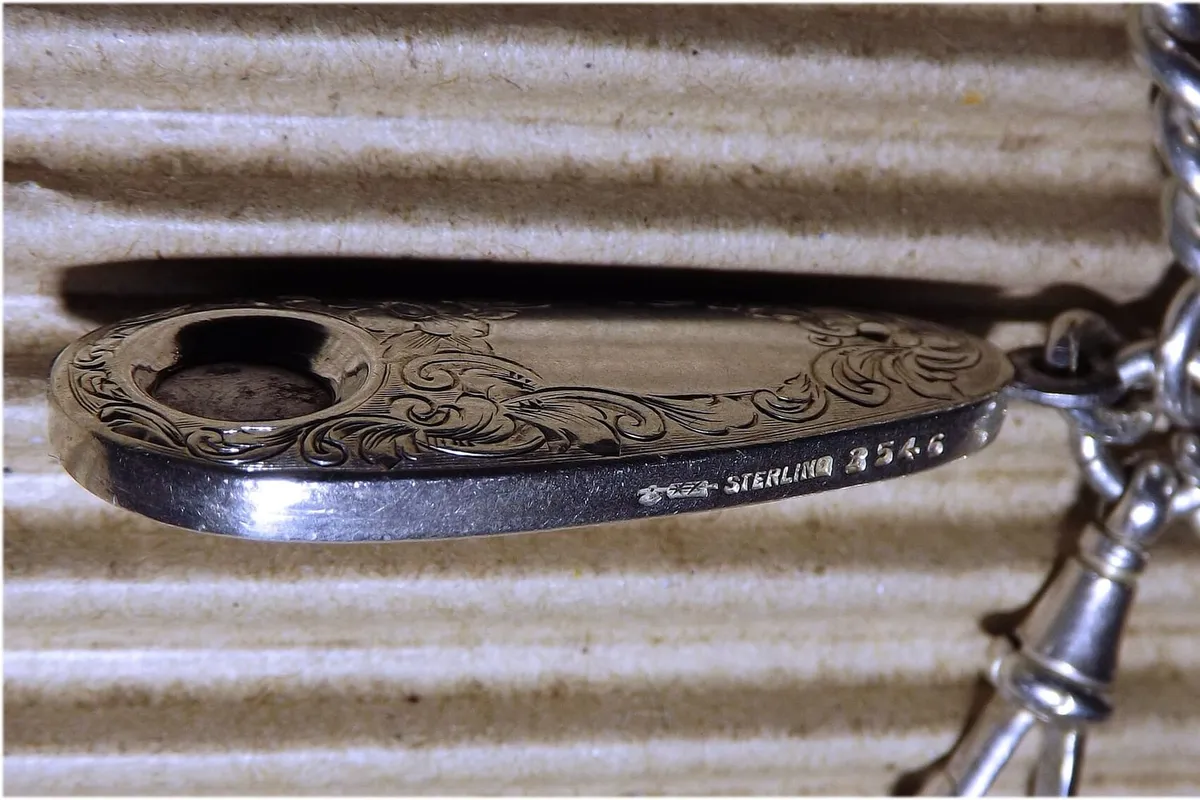
You will often see a fineness number without any of the rest. That may be a legitimate maker’s stamp on a piece that fell below the weight threshold for hallmarking, or it may be a stamp applied by the manufacturer with no independent testing behind it. The two look identical to a buyer.
Fineness numbers
Fineness is expressed in parts per thousand. The numbers worth recognising:
- Gold: 375 (9 carat), 585 or 583 (14 carat), 750 (18 carat), 916 or 917 (22 carat), 999 (24 carat).
- Silver: 925 (sterling), 958 (Britannia), 800 (often older continental silver).
- Platinum: 950 is the most common, with 900 and 850 also used.
- Palladium: 950 and 500.
Two consequences follow from these numbers. First, higher fineness means softer metal: 22 carat gold scratches and dents more easily than 9 carat, and 24 carat is close to unusable for a ring worn daily. Second, an alloy is a mixture, so the remaining percentage is made up of other metals — copper, silver, zinc, palladium, nickel — chosen for colour, hardness and workability. Those additions are why two 18 carat gold pieces can behave differently and why some people react to one white gold alloy and not another.
Plated, filled, rolled and vermeil
Most affordable jewellery is a base metal with a precious metal layer, and the labels are not interchangeable.
Gold plated or gold washed means a thin layer of gold applied over a base metal, commonly brass, copper or steel. The layer is measured in microns, and the thickness is rarely stated on the piece itself. Expect wear at the highest-contact points: the back and edges of a ring, the tip of a clasp, the outer curve of a bracelet.
Gold filled, historically rolled gold, means a thicker layer of gold mechanically bonded to a base metal, usually expressed as a fraction and a fineness, such as “1/20 12K”. That means the gold layer is one twentieth of the total weight and is 12 carat. Because the layer is far thicker than plating, gold filled pieces generally wear much longer before the base metal shows through.
Vermeil describes a sterling silver base with a gold layer of a stated minimum thickness. Definitions and minimums vary between countries, so treat the word as a description of construction rather than a standard you can rely on.
Rhodium plating is different again. It is a thin, hard, white metal layer applied over white gold or other metals to give a bright white finish. It wears, and white gold rings are commonly re-plated when the underlying slightly warmer colour starts to show.
What the mark does not tell you
- Plating thickness. “Gold plated” can mean anything from a flash coating to a durable layer.
- Whether the stamp is genuine. Counterfeits and mis-stamped pieces exist, and stamps can be added to base metal.
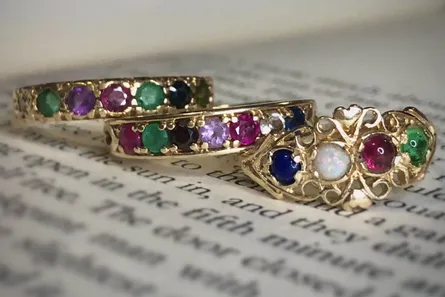
- What a stone is. Marks describe metal only.
- Age and provenance. A date letter can help date a hallmarked piece, but a stamped number alone proves nothing about history.
- How it was made. Cast, die-struck and hand-fabricated pieces can carry identical marks and behave very differently.
How to inspect a mark without damaging anything
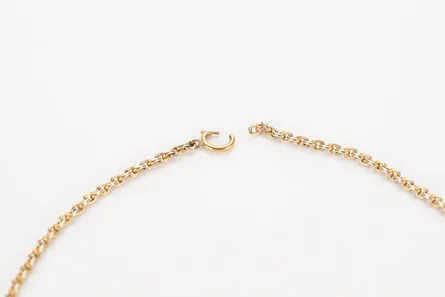
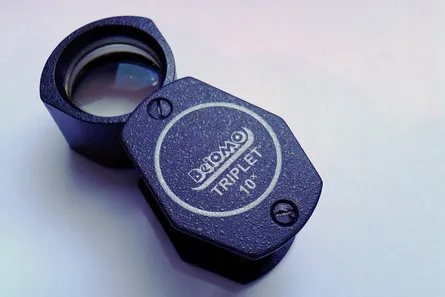
Look for the mark with a loupe or a phone macro camera, in daylight, with the surface clean of hand cream. Check that it sits on the metal rather than on top of a plating edge, and that the number is a recognised one. On a chain, look at the tag near the clasp as well as the chain itself.
Inspect the high-wear areas at the same time: the inside of a ring shank, the back of a pendant, the edges of a bracelet, the tips of the claws. Wear-through appears as a colour change — a yellower or greyer patch at an edge, or a faint halo where the plating has thinned. That tells you more about remaining life than any stamp.
Two tests are worth actively avoiding. Acid tests and scratch tests permanently mark a piece, and a home test kit’s result is unreliable enough that it will not settle a dispute. Opinions about magnets are also widely repeated and mostly wrong: a magnet can flag strongly magnetic base metal, but a magnet not sticking tells you almost nothing, because most precious metal alloys are not magnetic. If you need certainty, ask a jeweller to test the piece with an X-ray fluorescence analyser, which is non-destructive, or send it to an assay office.
Matching the mark to the job
The metal and its construction decide how much care a piece needs, so this is not academic. A gold filled chain worn daily can reasonably be expected to outlast a flash-plated one by a wide margin. A rhodium-plated ring will need re-plating at some point. A 22 carat bangle will show fine scratches quickly, and polishing it repeatedly removes metal permanently.
Two practical rules follow. First, structural advice from a jeweller is usually worth more than a stamp: a workshop can see how thick the metal is, where a joint has been made, and whether a clasp is up to the weight hanging from it. Second, if the metal composition matters to you — because of an allergy, because you plan to pass the piece on, or because you are paying a price that assumes solid gold — ask for the information in writing before you buy, and treat promises that are not written down as unproven.