Statement Earrings: Weight, Balance and Proportion
- Trinket File
- Buying
- 21 Sep, 2026
Statement earrings are sold facing the mirror. What decides if they ever leave the drawer sits behind the lobe: the post, the back, the total weight and how far the earring swings when you turn your head. A bold earring can be comfortable all day, but only when the visible design and the hidden engineering agree.
Today’s statement ear is broader than one oversized drop. Sculptural studs, textured hoops, crisp geometric shapes and mismatched pairs all have presence. The question isn’t how big the earring is. It’s how much visual weight it makes and how that weight is carried.
Presence doesn’t always mean length
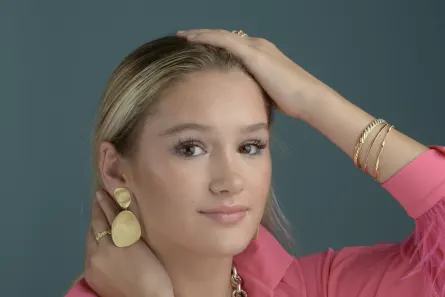
A close-fitting earring can look more confident than a long drop because it holds a strong silhouette against the face. A broad brushed-gold disc, a thick hoop or a gem-set stud makes impact through surface and finish. A long earring brings movement and pulls the eye down.
Pick by hair and neckline
Face shape is a styling consideration, not a rule. The relationship between earring, hair and neckline matters more.
| You’re wearing | Earring that works | Watch out for |
|---|---|---|
| Long, loose hair | Shiny metal or a strong stud that catches light | Drops disappear into the hair |
| Hair up or short | Long linear drops, sculptural shapes | Nothing much; this is where statement pieces shine |
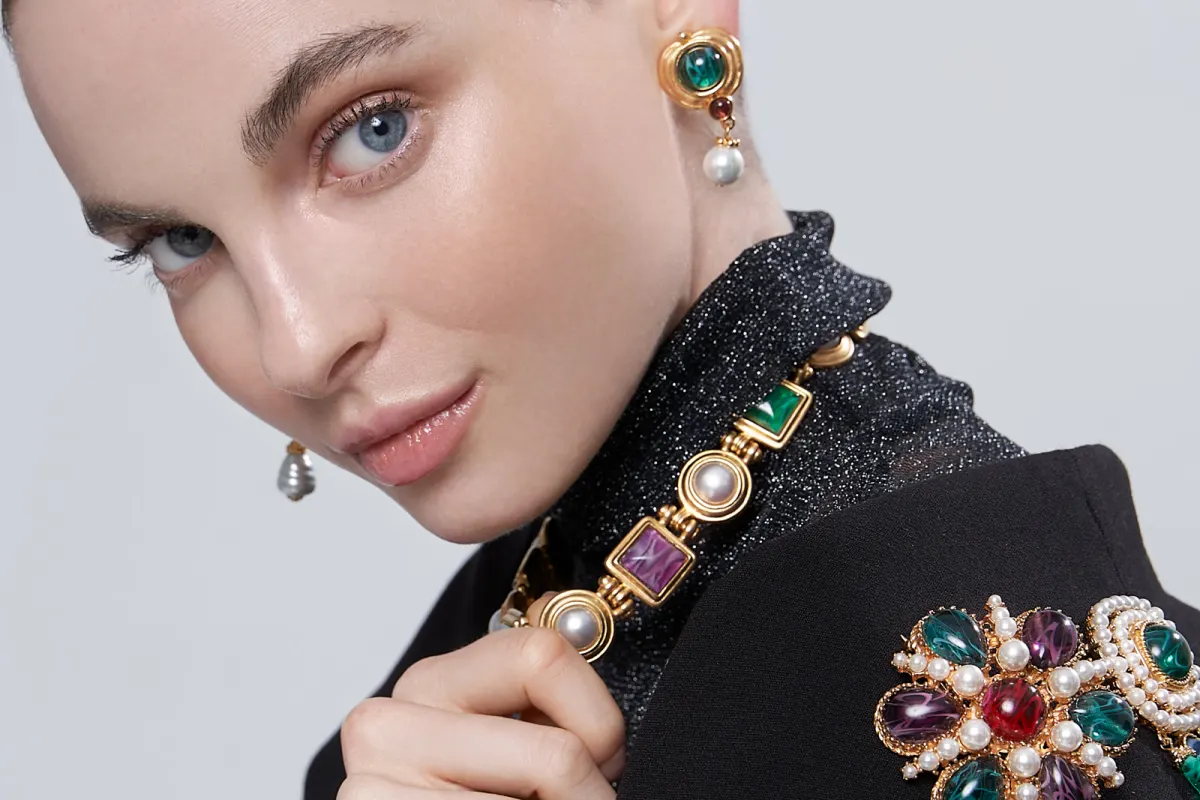
| High collar or turtleneck | Studs, small sculptural hoops | Big hoops get busy against the collar |
| Open neckline or bare shoulders | Long drops with room to show their full line | Competing with a big necklace |
Try them with the clothes you’ll actually wear. Hair up, then down. Your most-worn neckline. An earring seen on a neutral background can change character completely against a collar, scarf or bare shoulder.
Weight is felt at the lobe
Living tissue under constant load changes shape. A heavy earring on a thin post concentrates pressure into a small area of the lobe, and over months and years that can enlarge the piercing or pull the lobe down. A wide, supportive back spreads the pressure; a thin wire or post focuses it.
Total weight matters, but so does balance. A heavy front with a very light back tips forward and pulls on the piercing. A balanced earring sits closer to the lobe and moves less. If it swings freely, every head turn adds a small dynamic load.
Compare a new pair with earrings you already know are comfortable for a full workday. If the new pair feels noticeably heavier in your hand, it may still be wearable, but treat it as an occasional piece: not for sleeping in or a long flight.
Drops, hoops and surface area
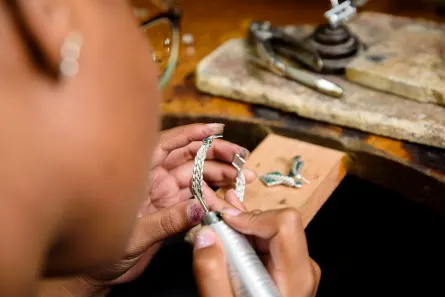
A drop gets movement from its length and flexibility. The joint between top and drop wears first. A soldered or articulated connection with enough material handles movement better than a thin open jump ring. Hold the top still and move the drop gently; any vagueness now will get worse.
Hoops spread weight differently. A small hinged hoop sits close to the lobe, while a large hoop puts the mass far from the support point. The bigger the diameter, the more leverage, so a wide hoop can feel heavier than its grams because the weight sits farther from the piercing.
Surface area affects comfort in warm weather too. A broad metal panel resting on the neck gets warm and noticeable. Textured or openwork designs feel lighter because they touch less skin and let air through, which is why a visually big earring can be easier to wear than a smaller solid block.
Choose the back for the job
- Butterfly backs: compact and quick, but the coil grip weakens as post and coils wear. For light studs and small drops.
- Screw backs: hold positively on a threaded post; good when an earring must stay put. Slower on and off.
- Bullet or silicone-lined backs: grip well new, though the insert hardens over time.
- Lever backs: clamp the post with a clear lock; common on heavier studs and sculptural pieces.
- French wires: rely on balance and gravity. Without a stopper, they can slide out when you move or look down.
A post should be long enough to clear the lobe without pressing. Too short squeezes the lobe between front and back; too long lets the earring hang away and catch hair or collars. About 8–12 mm suits many adult lobes, but piercing depth and lobe thickness vary.
The metal behind the front
The post touches skin even when it’s hidden. A gold-tone front can sit on a different alloy behind, and that hidden metal decides how a sensitive piercing reacts. Titanium, niobium, platinum and palladium-rich white gold are common low-reactivity choices. Plated posts are the least predictable, since wear exposes what’s beneath. In the EU, posts that go into a piercing must release less than 0.2 µg/cm² of nickel per week under REACH, a stricter limit than other jewelry gets; outside the EU, ask.
Nickel sensitivity usually builds after repeated exposure. Redness, itching or weeping behind the lobe is the typical sign. Discoloration is different: silver can leave a dark mark and copper alloys a green one. Neither means an allergy, but both are a reason to keep the earring clean.
Counter test
- Work the closure at least twenty times.
- Weigh the pair in your hand against a known comfortable pair.
- Check it balances instead of tipping forward.
- Move the drop and feel for looseness at the joint.
- Ask what the post and back are made of.
- Try it with the hairstyle and neckline you’ll wear it with.
- Store the pair separately so the fronts don’t scratch against chains or other earrings.
The best statement earring looks strong on and is forgotten ten minutes later. Proportion, surface and balance create presence; weight distribution, secure closures and skin-friendly metal create comfort. A pair that does both is worth more than one that only photographs well.